
Frequently Asked Questions
-
Brazilian Jiu-Jitsu is a martial art and combat sport that focuses on grappling and ground fighting techniques. It emphasizes leverage, technique, and strategy to overcome opponents of various sizes and strengths.
-
Absolutely! Gracie Barra Bryan welcomes students of all skill levels, including beginners. Our classes are designed to cater to individuals with no prior experience in BJJ. Our instructors provide comprehensive instruction and support to help beginners learn and progress at their own pace.
-
No, you do not need to be in peak physical condition to begin training in Brazilian Jiu-Jitsu. BJJ itself is a great way to improve your fitness level. Our classes are structured to accommodate different fitness levels, and our instructors will help you gradually develop strength, endurance, and flexibility.
-
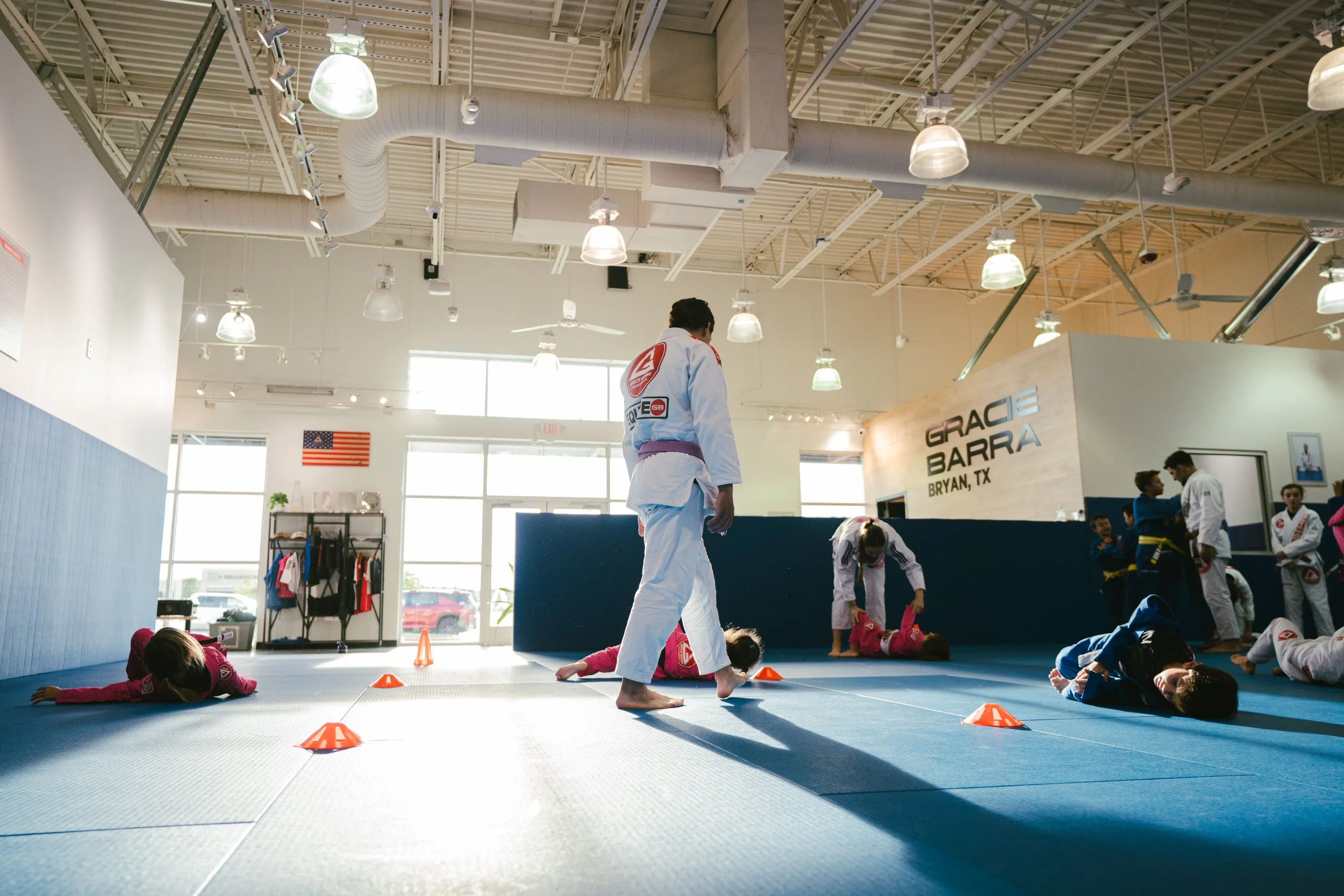
Yes! Gracie Barra Bryan offers specialized programs for children. BJJ can benefit children by teaching them discipline, self-confidence, respect, and practical self-defense skills in a safe and controlled environment.
-
Brazilian Jiu-Jitsu is highly effective for self-defense because it focuses on ground fighting, where many real-life altercations end up. BJJ techniques allow individuals to neutralize and control opponents without relying on size or strength, making it suitable for individuals of all ages and body types.
-
While it's common for BJJ academies to provide loaner or rental equipment for beginners, you will eventually need to invest in a few essential items. These typically include a BJJ gi (uniform), a mouthguard, and protective gear like knee pads or rash guards. Your academy can guide you on the specific requirements.
-
The frequency of training can vary depending on individual goals and availability. For beginners, it's recommended to start with a few classes per week to build a solid foundation. As you progress, you can gradually increase training frequency. Consistency is key, so aim for a balance that fits your schedule and allows for recovery.
-
Yes, Brazilian Jiu-Jitsu utilizes a belt ranking system to signify a practitioner's progress and skill level. The traditional belt colors are white, blue, purple, brown, and black. Each belt requires a certain level of proficiency, time in training, and demonstration of technique and knowledge. Advancement in belt rank is typically determined through regular evaluations conducted by qualified instructors.